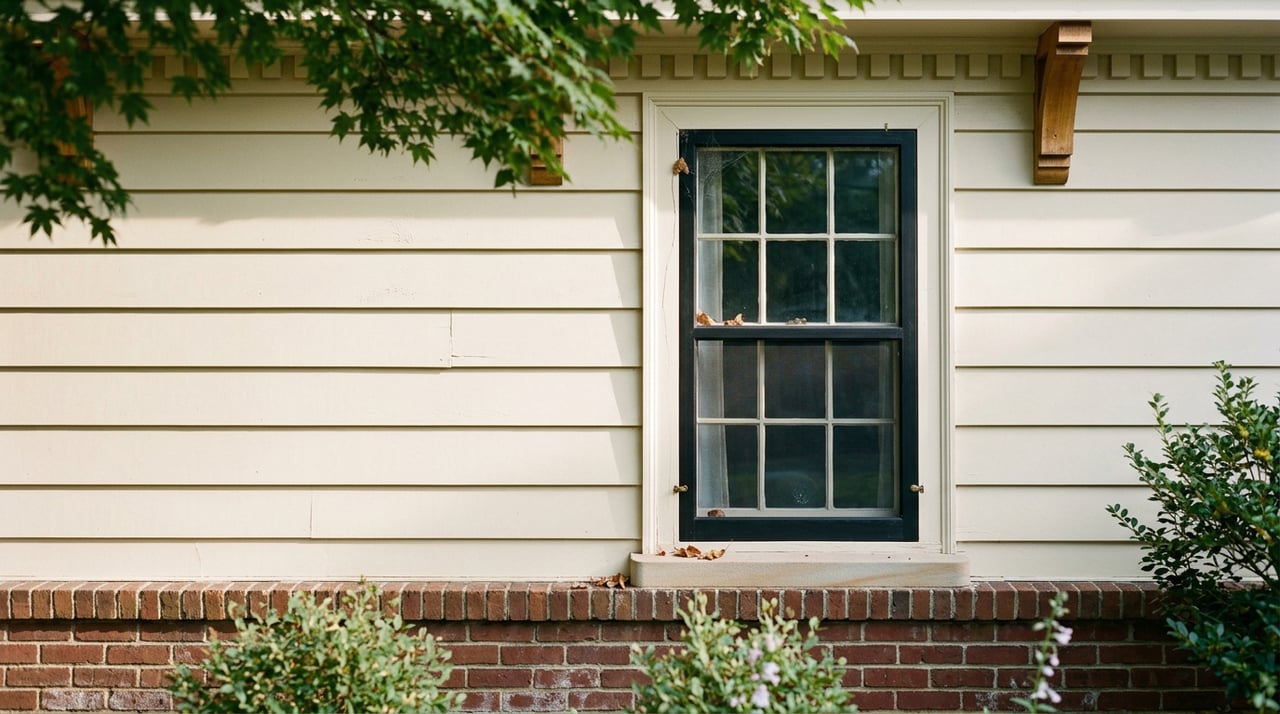
The Mapleton Hill LAC Question: What A Historic District Designation Actually Changes At The Closing Table
August 6, 2026
August 6, 2026
Homes in Mapleton Hill sold in about 40 days over the trailing twelve months while the broader Boulder County average sat closer to 88 days as of April 2026. In the same window, the neighborhood's median sale price came in near $1,442,750, down roughly 11% year over year. Two numbers, one contradiction. Scarcity and walkability explain part of it. The rest is a scheduling problem hiding inside a preservation rule.
That rule is the Landmark Alteration Certificate, and it deserves a seat at the closing table long before it usually gets one.
Mapleton Hill was designated a local historic district in the wake of Boulder's 1974 Historic Preservation Ordinance, one of the first in Colorado, drafted with Historic Boulder, Inc. and codified at Title 9, Chapter 11 of the Boulder Revised Code. Every property inside the district boundary sits under the same review regime, whether it is an 1895 Queen Anne, a 1930s bungalow, or a 2018 infill built to complement its neighbors. Any exterior change requires a Landmark Alteration Certificate from the city before a building permit will issue.
The word "any" is not rhetorical. Boulder's guidance is explicit that the review requirement is not tied to a building's age within the district. A newer accessory structure gets reviewed. A repaint gets reviewed. Solar panels, roofing, storm windows, fencing, mechanical equipment, paving, and the removal of a mature tree all trigger review. Landscaping and patio furniture do not.
For a seller who wants the front porch tightened up and the trim repainted before listing, this is a calendar item, not a permit line. For a buyer running the numbers on a renovation, it is the difference between a spring closing and a fall one.
The scope of the LAC surprises owners who assumed only major additions counted. A partial list of what routinely lands on a Landmarks Design Review Committee or full Landmarks Board agenda in Mapleton Hill:
The Landmarks Board applies the Secretary of the Interior's Standards for Rehabilitation. Window rehabilitation is preferred over replacement. Additions must be legible as additions rather than as attempted historic fabric. Non-contributing buildings inside the district get reviewed too, though usually with a lighter touch.
The clock is the part of the story that reprices the transaction.
| Review pathway | Typical duration | Common triggers |
|---|---|---|
| Staff-level administrative approval | 2 to 4 weeks per round | In-kind repair, pre-approved paint colors, minor repairs |
| Landmarks Design Review Committee (LDRC) | 2 to 4 weeks per round | Window restoration, storm windows, small additions, garage remodels |
| Full Landmarks Board hearing | 6 weeks to 3 months | New construction, significant additions, demolition of features, non-contributing scope |
| Each additional round of review | Add 2 to 3 weeks | Revisions requested by staff or board |
Two structural details are easy to miss. There is no application fee, which sounds friendly until you notice that an approved LAC is valid for one year and cannot be extended. Miss the window between approval and permit finalization and the applicant starts over. That one-year clock is what turns an ambitious buyer's renovation plan into a real underwriting question.
Colorado's Seller's Property Disclosure form SPD19, effective January 1, 2026, is completed to the seller's current actual knowledge. In a historic district, that phrase carries more weight than it does elsewhere. The form asks about additions or alterations made or building improvements constructed within the past year, about code or permit violations, and about any zoning or governmental notices affecting the property. Owners who repainted, replaced a door, or swapped in aluminum-clad windows without an LAC have a disclosure question waiting for them, and the state's guidance under C.R.S. § 38-35.7 is not sympathetic to strategic forgetfulness.
Two more disclosures apply to essentially every original home in the district. Federal lead-based paint rules require the EPA pamphlet, a Lead Warning Statement, and a 10-day inspection window on any home built before 1978. Colorado's SB 23-206 requires a bold-faced radon warning in the residential contract and delivery of any prior radon test records. Stone foundations and unfinished basements common to 1890s Mapleton Hill homes tend to test on the higher side, and buyers routinely price mitigation into their offer.
For the seller, the practical read is that any unpermitted exterior work becomes a live item in the negotiation. Fix it, disclose it, or discount for it. Doing none of the three is where post-closing litigation risk lives.
The current market is not the market of 2021. Boulder's 2026 forecast points to 3 to 5% appreciation with mortgage rates stabilizing between 5.5 and 6%. Neighborhood-level, the softer median compared to a year ago suggests buyers have room to be selective. That selectivity shows up in how offers get structured around renovation scope.
A buyer targeting a $2.5M Mapleton Hill home that needs a new roof, six windows restored, a rear addition, and a detached garage rebuild is looking at:
That is a real carrying-cost calculation, and it is the reason well-priced turnkey homes in the district clear faster than the county average while unrenovated homes at the same address point can sit. The LAC does not slow the market. It sorts it.
The Landmarks Board's own agendas are the clearest tuition a Mapleton Hill seller can pay. A June 2024 hearing considered 1105 Spruce Street under case HIS2023-00192, a contributing property where the applicant proposed a new two-story building, a rear addition, and modifications to an accessory building. The scope pulled the project into full board review rather than staff sign-off. A separate 2024 application at 432 Concord Avenue, case HIS2024-00038, dealt with demolition of a 1990s accessory building and a new 1.5-story two-car garage on a non-contributing property. Both projects went through conditions of approval and follow-up review, adding months to the timeline.
At the lighter end, 814 Pine Street under case HIS2022-00304 involved replacing a non-historic door, restoring wood windows, and adding wood storm windows. That kind of scope is exactly what the LDRC is designed to move quickly, and the case is a good template for a pre-listing refresh done inside the rules.
The lesson from the docket is not that approval is unpredictable. It is that scope choice determines timeline, and timeline determines whether the work gets done before the sign goes in the yard.
The 11% year-over-year softening in the trailing-twelve-month median is not a signal that Mapleton Hill has cooled. It is a mix signal. Fewer trophy sales at the top of the range pull the median down without changing what a well-prepared home in the $1.7 to $3.5M band trades for. The homes that hit that band with completed LAC work, closed permits, and clean disclosures are still the ones going under contract inside a month. The homes that arrive with visible unpermitted work, or with a partially completed exterior project, are the ones absorbing price reductions.
Which brings the story back to the thesis. In this district, preparation is not staging. It is paperwork.
Does an approved LAC transfer to the new owner? Yes, but the one-year validity does not restart at closing. A buyer inheriting an approved LAC needs to confirm the remaining time on the certificate and plan permit finalization accordingly.
Do I need an LAC to sell? No. Selling triggers disclosure obligations, not review. What triggers review is exterior work. The two intersect when past work was done without approval and now needs to be addressed on the SPD.
Is state tax credit help available for the work? Colorado offers a state income tax credit for approved rehabilitation of local landmarks and contributing buildings in local historic districts. The scope, receipts, and pre-approval matter. The credit is worth a conversation with a CPA who has done one before.
If you own in Mapleton Hill and are thinking about a spring or fall listing, the calendar work starts now, not at the pre-listing consult. Anne Wells has walked sellers through the district's review process alongside pricing and presentation for three decades, and would be glad to talk through what your specific address needs before you make the first phone call to a contractor. Let's Connect.
Stay up to date on the latest real estate trends.
Anne Wells, a devoted Boulder local for 30+ years, blends expert real estate knowledge with a passion for design and offers a unique perspective. Her no-pressure, hands-on approach creates a stress-free environment. With a background in English and Fine Arts, she merges art and functionality, envisioning personalized spaces for clients. Anne's honesty and advocacy make her the ideal partner for a seamless real estate experience. Join me now!